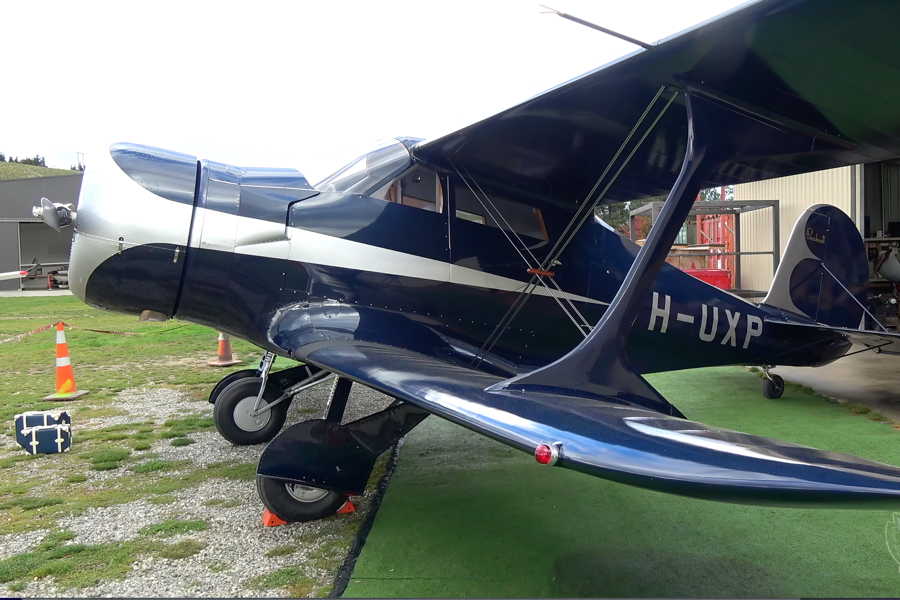
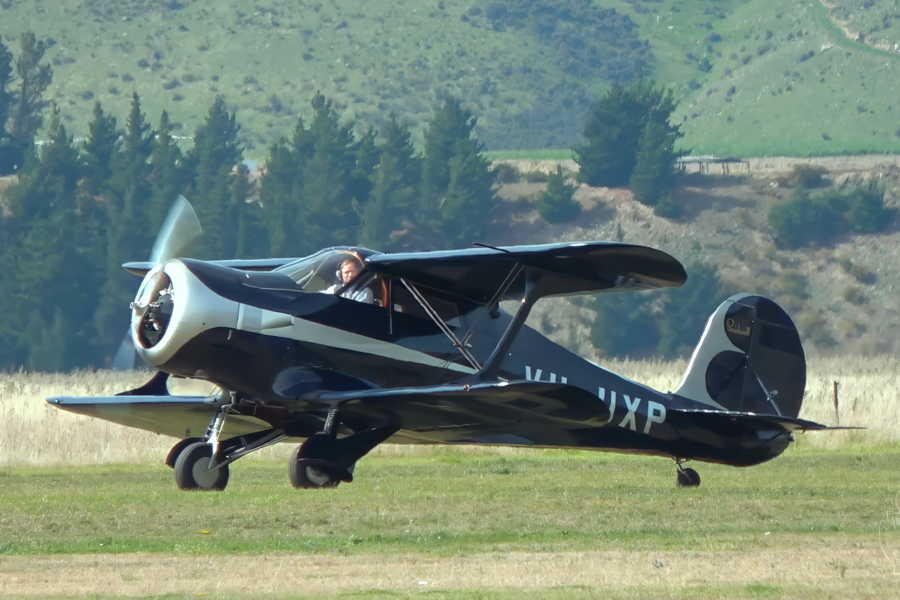
Staggerwing At Omaka

-
Preserving and Recording Audio-Visual History
The Model 17 Staggerwing flew for the first time in November 1932 and was one of the fastest aircraft in the world at the time. A powerful aircraft, it initially proved to be a handful for many pilots, particularly on the ground due to a number of factors which were improved upon when the D Model was developed in the mid-1930's.
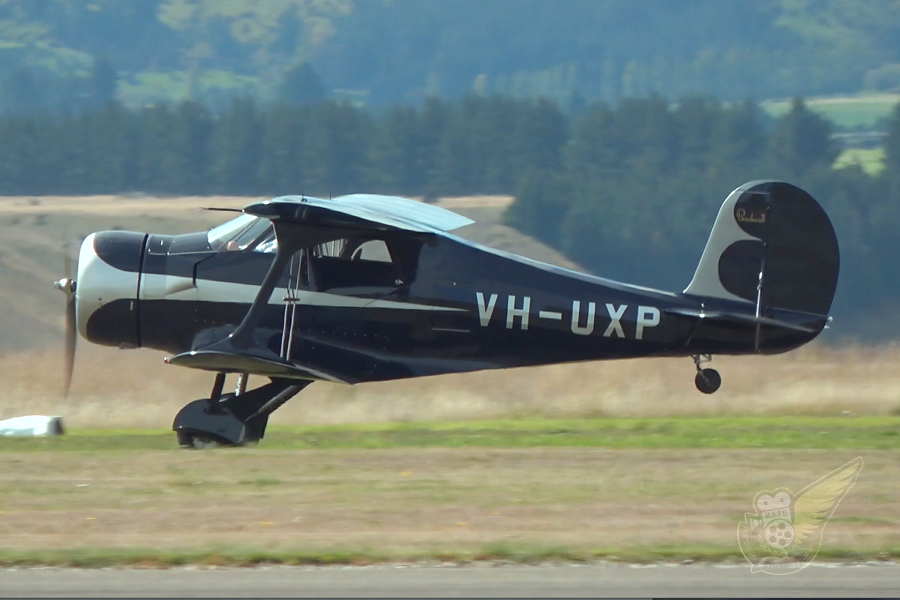
With the thottle wide open Cam Hawley throws the Staggerwing down the grass runway to take-off at Wanaka airport during a Warbirds Over Wanaka airshow.
Photo: © Historical Aviation Film Unit
Year: 1933 Built: 785 Registration: VH-UXP Construction No: 108 Capacity: 3 or 4 passengers Wingspan: 9.75m Length: 7.93m Height: 2.44m Engine: 285hp Jacobs R-755-B2 radial Max Speed: 341 km/h Cruise: 325 km/h Ceiling: 7,600 m Range: 1,078 km Climb: 7.6 m/sec Empty Weight: 1,152 kg
It is the unusual negative stagger configuration of the wings (where the upper wing is set further back than the lower one) which gives the type its name. The aircraft also features retractable landing gear which was unusual at the time, but those along with the streamlined fuselage, relative light weight, and the powerful radial engine all helped the aircraft perform well.
In the late 1930’s some Model B’s were impressed into temporary service and used as bombers by the Republican forces during the Spanish Civil War.
Cam and Tracey Hawley talk about their aircraft.
The type saw service with the US Army Air Force and the Royal Navy during World War Two, and the single Staggerwing in New Zealand at the start of the war was pressed into service with the RNZAF until 1945.
This aircraft is finished in the same livery it originally wore when it was built in 1936 (depite the fact that many people assume all Staggerwings are red).
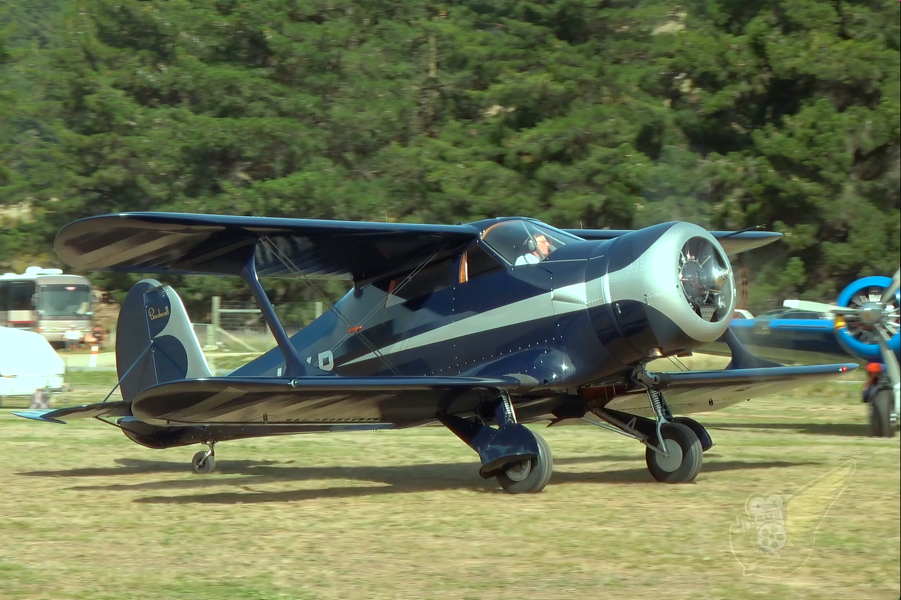
This shot of Cam taxying the aircraft in after an airshow display highlights how the forward vision of the pilot is completely unobstructed by the top wing which sits aft of the cockpit. Photo: © Historical Aviation Film Unit
Shipped to Australia and registered as VH-UXP in 1936, in 1942 the aircraft was impressed into RAAF service but returned to civilian use ten years later. In 1953 the aircraft was flown by Hazel Roberts competed in and won the first Australian Transcontinental Air Race for women. After an extensive six year restoration process by Croydon Aircraft Company in Mandeville (Southland), the aircraft took to the skies again in 2012.
More Videos:
Staggerwing At Omaka
Two Red Staggerwings
Static Walkaround
Staggerwing and Devon
More Photos:
Share This Page :
If you sign up to be a Member on our Historical Aviation Film Unit channel then you'll have immediate access to this extra material. Click the button at right, then on our channel page click the 'Join' button - it'll help us immensely.
Please consider subscribing to HMTV, or buy us a drink to support our historical (story and film) preservation endeavours.
Copyright © All Rights Reserved — Historical Aviation Film Unit
Template by OS Templates