Kittyhawks Display At Wartime Field

-
Preserving and Recording Audio-Visual History
With over 14,000 examples of the Curtiss P-40 built, it was one of the most important US-built fighters of the first half of World War Two. Serving in almost every theatre of the war, the Pacific, Asia, North Africa and Europe, the P-40 was variously known as the Tomahawk, Warhawk or Kittyhawk depending on the model and the service with which it flew.
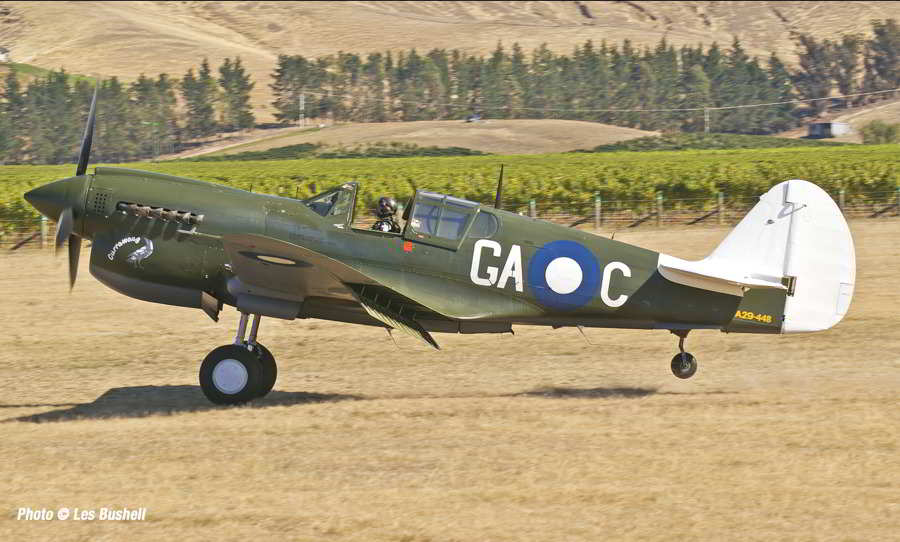
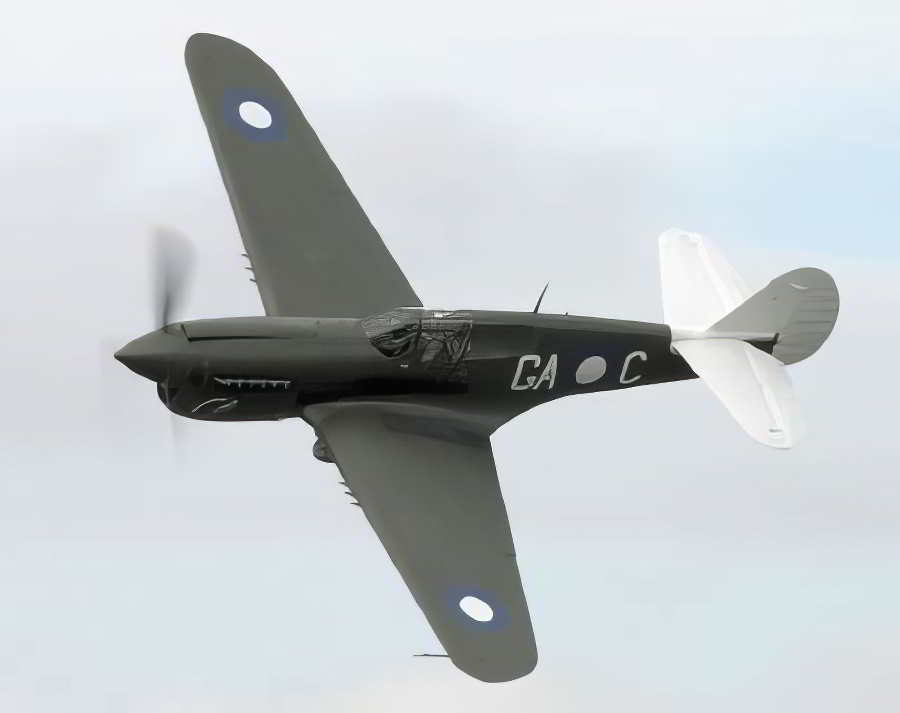
The Kittyhawk performing at Omaka Aerodrome, in Blenheim (NZ).
Photo: © Les Bushell
Year: 1939 Built: 13,378 Serial: 13A29-448 Registration: ZK-CAG Top Speed: 538 km/h at 4,600m Wingspan: 11.367m Height: 3.25m Length: 9.665m Engine: 1240hp Allison V0-1710 V-12 Inline Ceiling: 8,900m Range: 1,152km Armament: 6 x 12.7mm (0.50in) machine guns and up to 910kg of external bombs
In the Europen Theatre of war operations were often conducted at a higher altitude than elsewhere around the world, and because the P-40 didn't have the same sort of performance at higher altitudes as itscontemporary Allied aircraft, it didn't serve in that theatre for long. However, as a low-level fighter the aircraft was very effective, and it continued to be used in the other theatres of operation (including Russia) well into the later stages of the war.
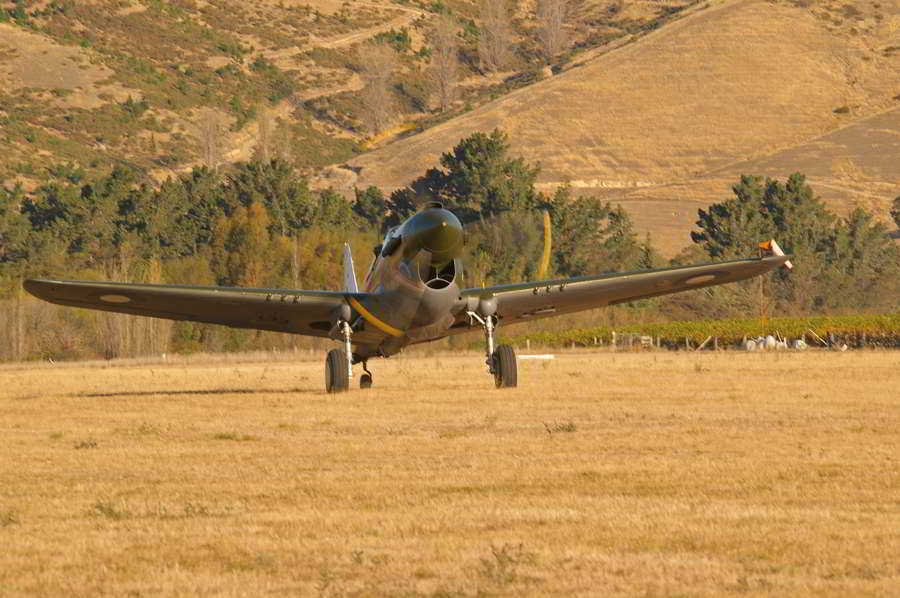
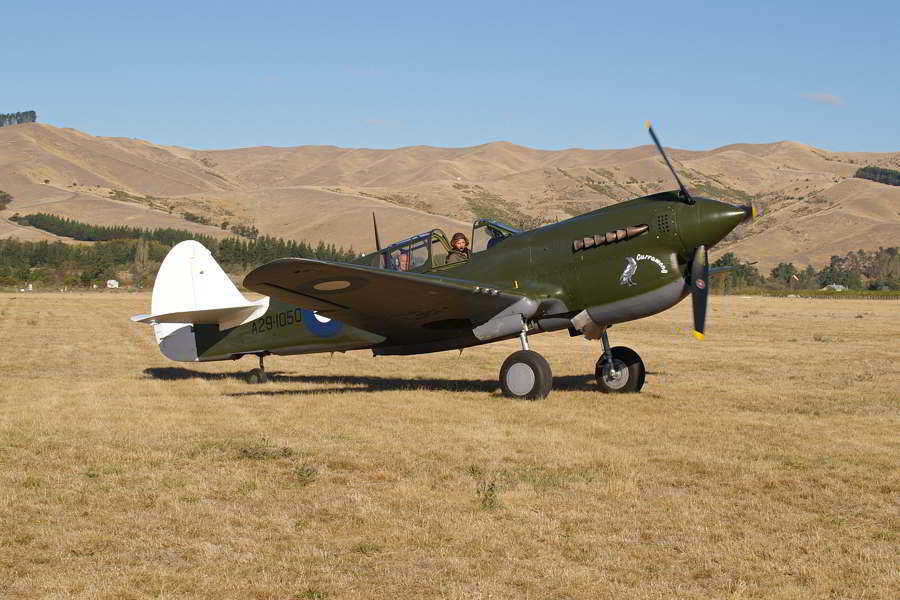
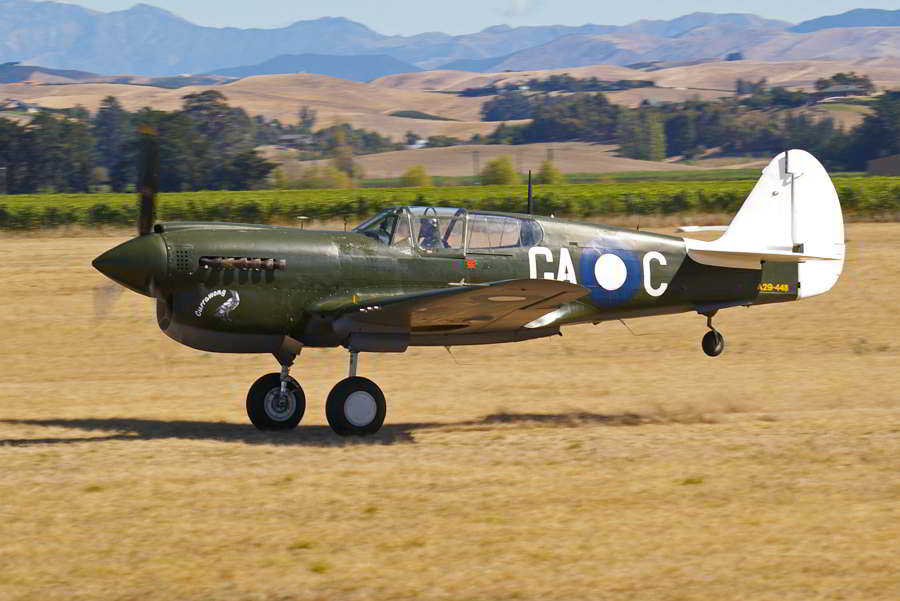
This P-40N-1, named Currawong, is A29-448, and it’s painted in an authentic Royal Australian Air Force colour scheme. The aircraft is one of 848 P-40s that were operated by the RAAF during the Second World War.
The aircraft was delivered to No 75 Sqn RAAF in New Guinea during September 1943 already painted with the regulation white (South West Pacific) identity markings on the tail. These were required to be carried by all Allied front line fighters in the Pacific Theatre to aid recognition. The regulations stated the leading edges of the wings should also be painted white, but A29-448 was one of a number of aircraft that did not carry these markings.
Currawong is shown here during its display at the Mosquito Launch Spectacular airshow held at Ardmore Aerodrome, Auckland, New Zealand in late 2012.
The aircraft was flown by a number of pilots in combat operations in the Milne Bay and Goodenough Island areas up until March 1944. On 13th March that year the aircraft hit a drainage ditch while taxiing and the port oleo leg collapsed, causing some damage to the airframe, wing and engine.
Repaired relatively quickly, in May 1944 Currawong was transferred to No 78 Squradon RAAF based at Tadji in Papua New Guinea. A complete failure of the electrical system on its first operational sortie with 78 Squadron lead to a crash landing with substantial damage. This time the aircraft was deemed to be beyond repair, and approval was given to reduce the aircraft to spares.
The aircraft was recovered as a bare fuselage from Tadji in 1974, along with a number of other aircraft, by New Zealander Charles Darby. After restoration it was returned to air worthiness in 2000.
This two-seat Kittyhawk is available for adventure flights with operator Warbird Adventure Rides for anyone interested in experiencing the feeling of flight in a genuine historic WW2 aircraft - click here for more details.
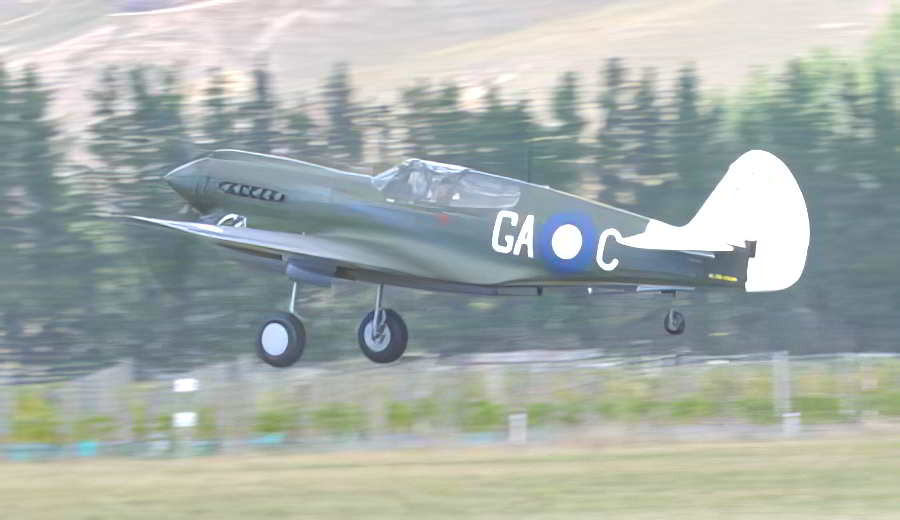
Currawong rises into the air at Omaka Aerodrome. Photo: © Historical Aviation Film Unit
The Royal New Zealand Air Force operated several squadrons of P-40 Kittyhawk fighters during the Second World War, and at various times many of these aircraft were based in Blenheim (primarily at RNZAF Base Woodbourne). Other P-40 units were also based at Hood Aerodrome in Masterton.
More Videos:
Kittyhawks Display At Wartime Field
The Restoration Of Currawong
Two Kittyhawks Display At Low Level
One Of The First Post-Restorations Displays
More Photos:
Share This Page :
If you sign up to be a Member on our Historical Aviation Film Unit channel then you'll have immediate access to this extra material. Click the button at right, then on our channel page click the 'Join' button - it'll help us immensely.
Please consider subscribing to HMTV, or buy us a drink to support our historical (story and film) preservation endeavours.
Copyright © All Rights Reserved — Historical Aviation Film Unit
Template by OS Templates