Widgeon Montage

-
Preserving and Recording Audio-Visual History
Grumman initially developed the Widgeon for civilian aviation on the basis that the earlier and larger G-21 Goose would be adequate for more commercial sized operators. Shortly after production began in 1941 many Widgeons were pressed into service with the US military for utility tasks, search and rescue missions, and coastal patrols. Despite its relatively small size, the G-44 was well-regarded for its reliability, ease of operation, and ability to operate from both land and water bases, which made it invaluable in regions with limited infrastructure.
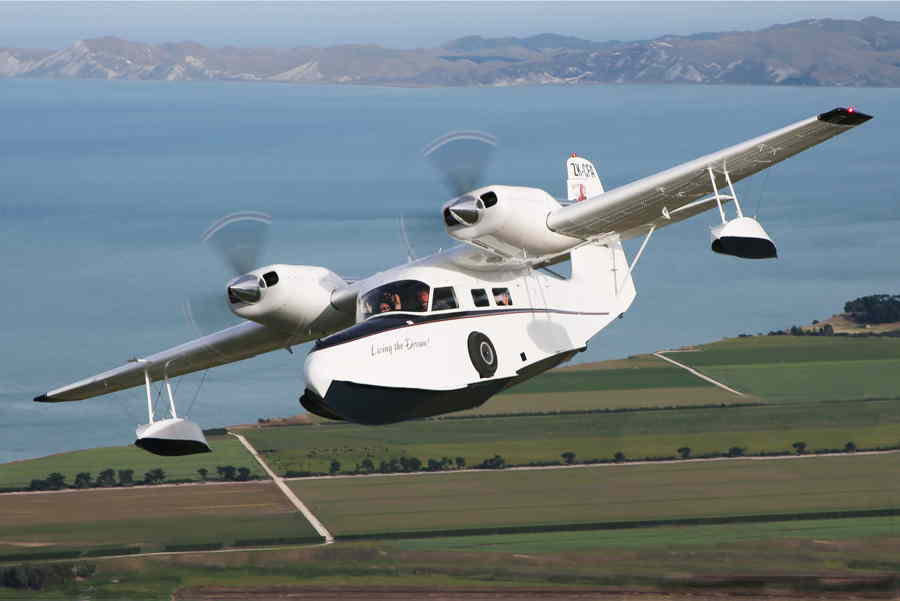
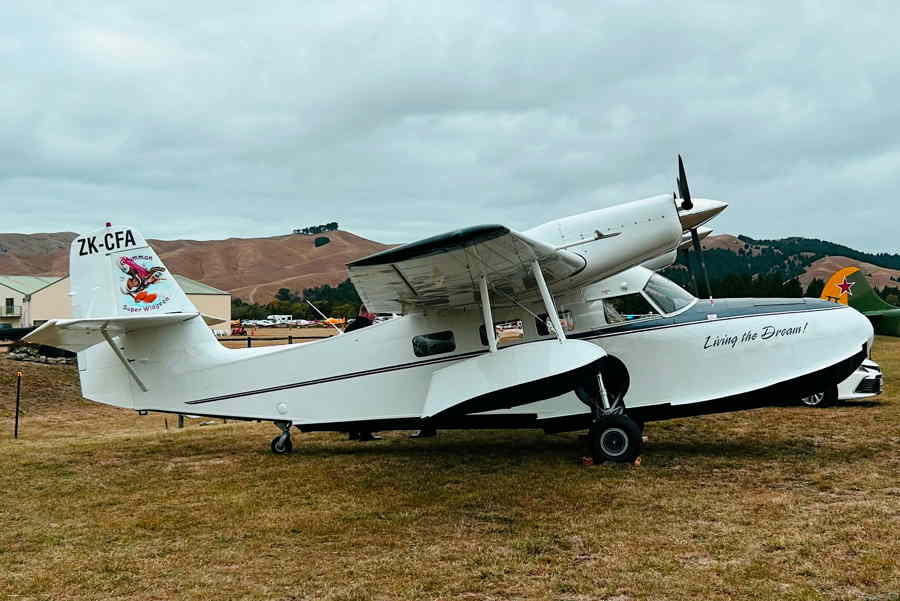
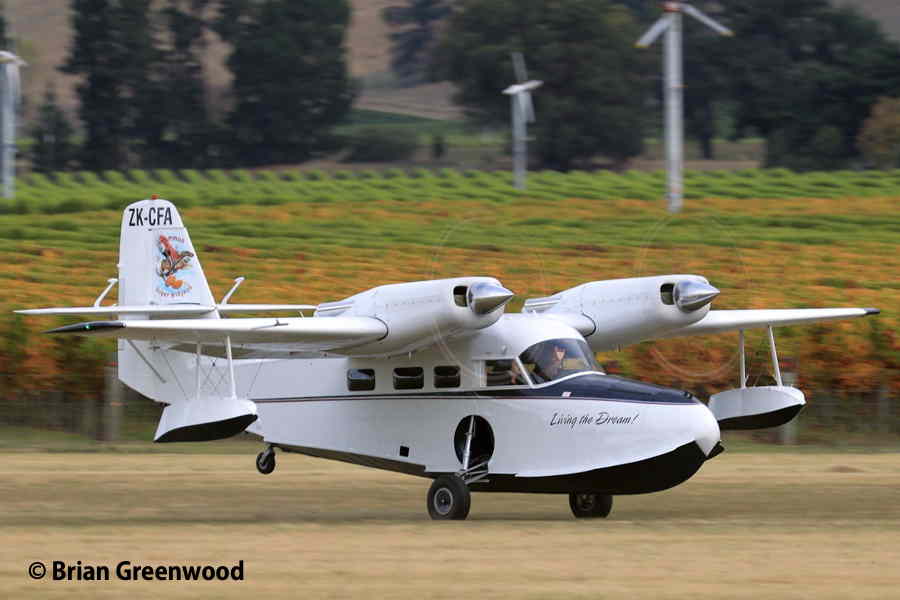
ZK-CFA is once again gracing the Northland skies.
Photo: © Supplied
Year: 1940 Built: 317 (incl 41 French built) Registration: ZK-CFA Capacity: Four passengers, one crew Wingspan: 12.19m Length: 9.47m Height: 3.48m Engine: 2 x 200hp Ranger L-440-5 inverted six-cylinder inline (original G-44) Max Speed: 246km/h Cruise: 222km/h Ceiling: 4,500m Range: 1,400km Climb: 3.6m/sec Empty Weight: 1,470kg Gross Weight: 2,053kg
During the Second World War, Widgeons served with the United States Navy (as the J4F-1), Coast Guard, Civil Air Patrol, and the Army Air Force, as well as with the Royal Navy, which gave it the service name 'Gosling' (i.e. a baby Goose). Many of these aircraft were adapted to carry a 90kg depth charge which could be used for anti-submarine operations.
On August 1, 1942, a J4F-1 flown by US Coast Guard Patrol Squadron 212 based out of Houma, Louisiana, spotted and attacked a German U-boat off the coast of Louisiana. The pilot, Henry White, reported the submarine was sunk and he was subsequently credited with sinking U-166 and awarded the Distinguished Flying Cross. Despite this the sinking of U-166 is now credited to a US Patrol Craft two days before White's encounter with a submarine. Itis now believed that White attacked U-171, a type identical to U-166, but that hisd attack was in fact unsuccesful.
Here's a video about a Canadian Super Widgeon. We'll bring you a video of ZK-CFA as soon as possible.
After the Second World War, Grumman redesigned the Widgeon to make it more suitable for civilian operations by changing its hull to improve its water handling, and six seats were installed. Seventy-six of these new G-44As were built by Grumman (the last in January 1949). Another 41 were produced under license by the Société de Construction Aéronavale (SCAN) in La Rochelle, France, as the SCAN 30. Most of these ended up in the United States.
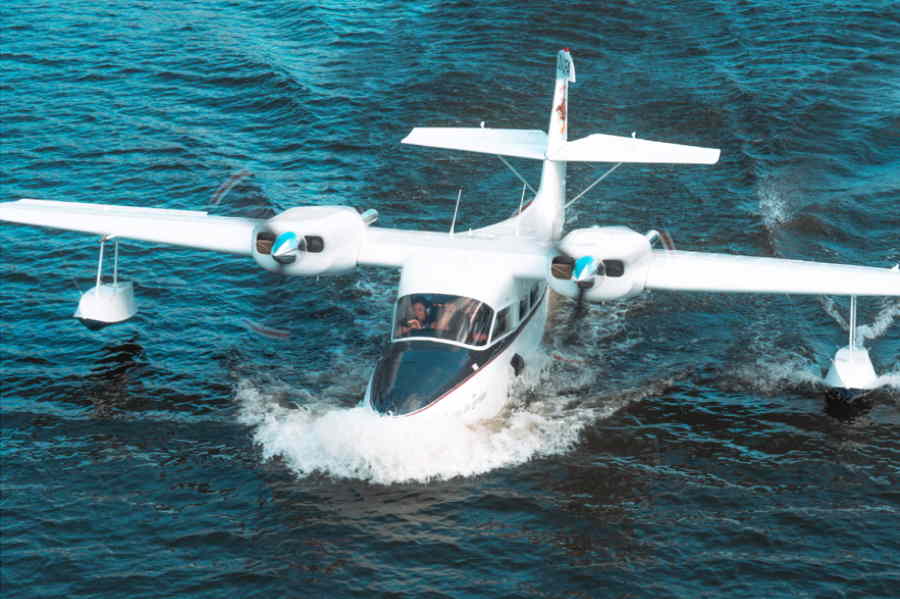
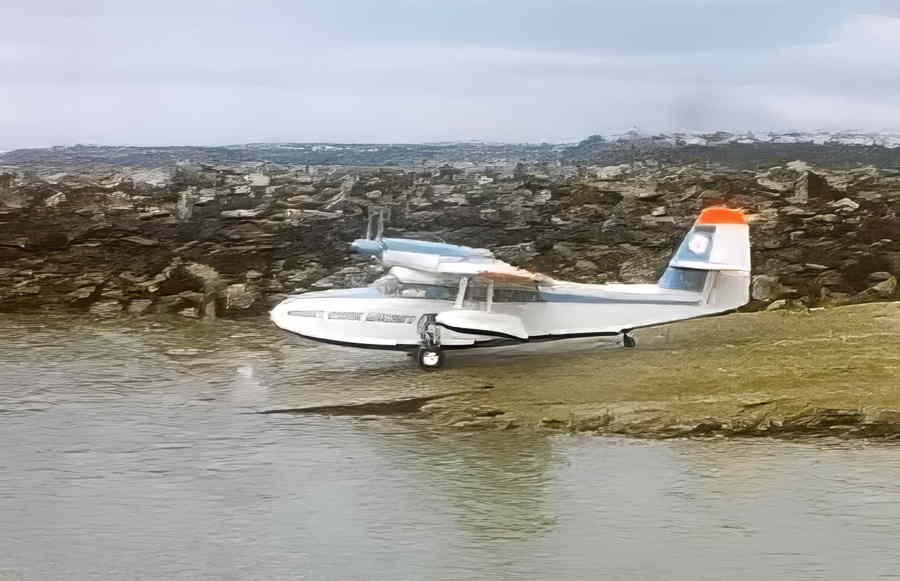
The Widgeon is almost as happy at home on the sea as she is in the air! Photo: © Historical Aviation Film Unit
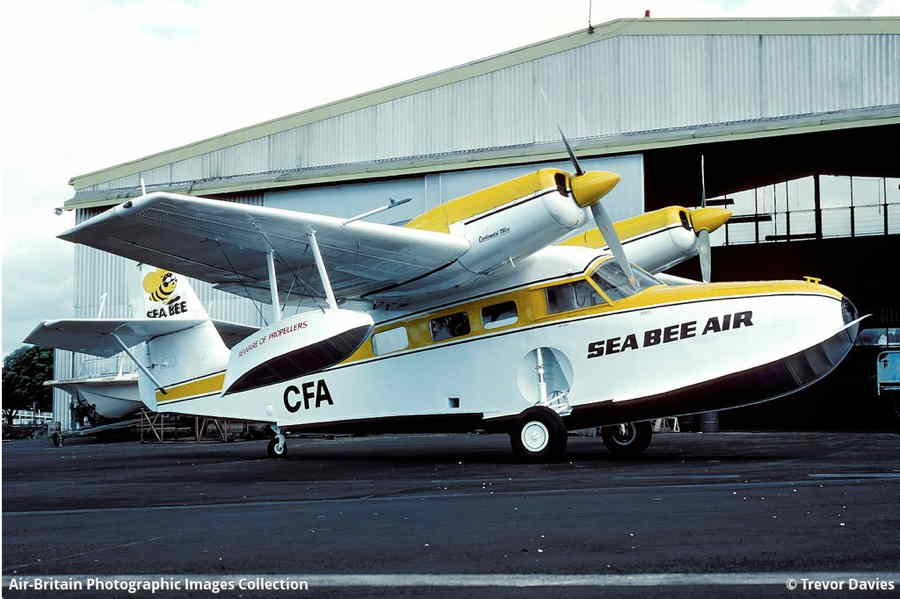
In 1963, ZK-CFA was one of two Widgeons purchased in the US by NZ Tourist Air Travel Ltd for use in the company's North Island operations. Originally built in 1946, the aircraft was upgraded to Super Widgeon status with two 260 HP Continental IO-470-D engines replacing the original 200hp Rangers.
Over the next 35 years the aircraft was also operated on passenger carrying services by Mount Cook Airlines (including some flight time in the South Island), Sea Bee Air (both in NZ and Tuvalu), Aquatic and Vintage Airways and finally Salt Air in the Bay of Islands. Withdrawn from service in 1996, the aircraft has been fully restored and flew again in November 2022.
More Videos:
Widgeon Montage
Take-Off
Widgeon Checkout
Landing Flyby
More Photos:
Share This Page :
If you sign up to be a Member on our Historical Aviation Film Unit channel then you'll have immediate access to this extra material. Click the button at right, then on our channel page click the 'Join' button - it'll help us immensely.
Please consider subscribing to HMTV, or buy us a drink to support our historical (story and film) preservation endeavours.
Copyright © All Rights Reserved — Historical Aviation Film Unit
Template by OS Templates