Another Triplane Vs Sopwith Camel Dogfight

-
Preserving and Recording Audio-Visual History
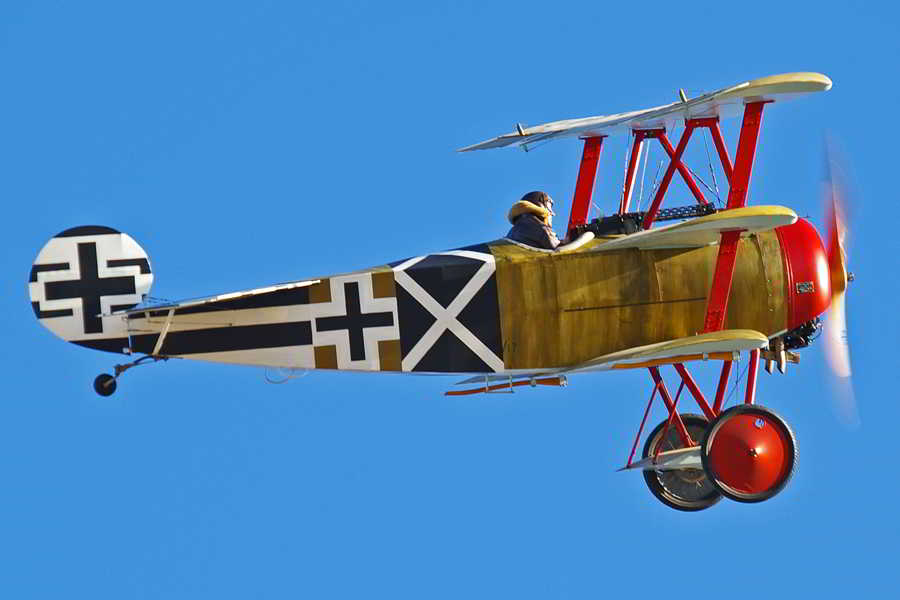
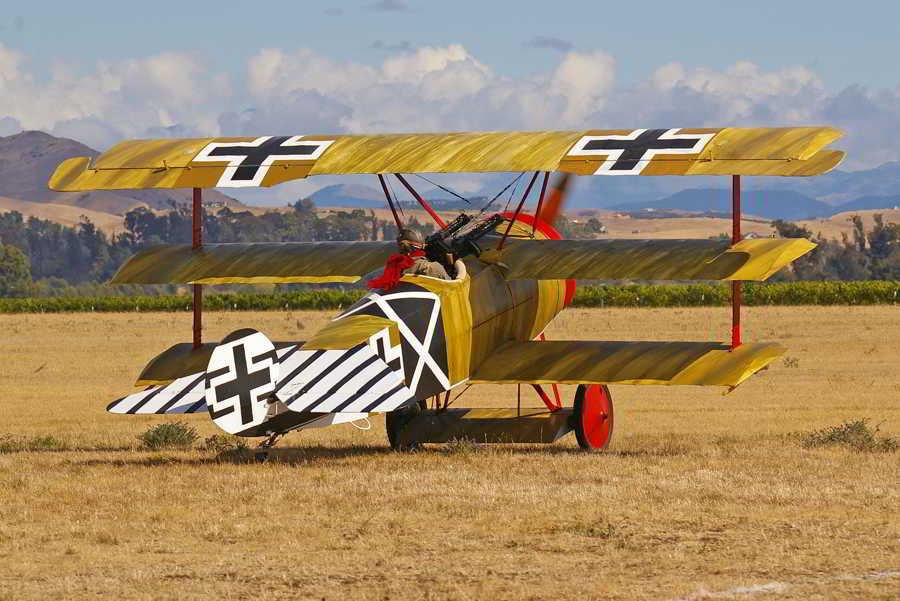
Developed by the Dutch aircraft manufacturer Fokker-Flugzeugwerke, the Dr.1 made its first appearance in the skies over France in late 1917. The triplane was a response to the success of the Sopwith Triplane used by the Allies, and it quickly gained a reputation for its exceptional maneuverability and rate of climb, attributes that were highly prized in the dogfights of the era. The Dr.1's design featured three wings stacked vertically, which provided improved upward visibility for the pilot and allowed for tighter turning radii in air combat.
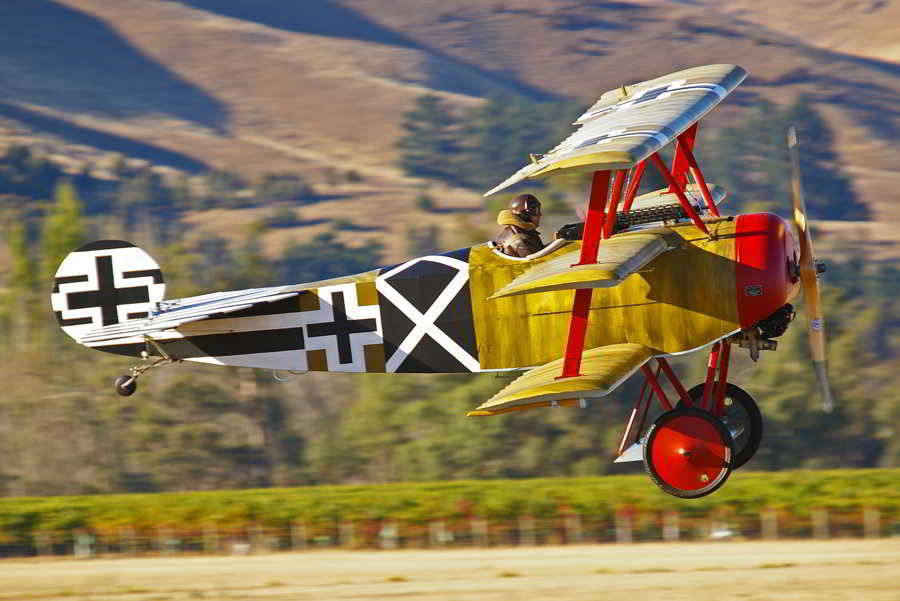
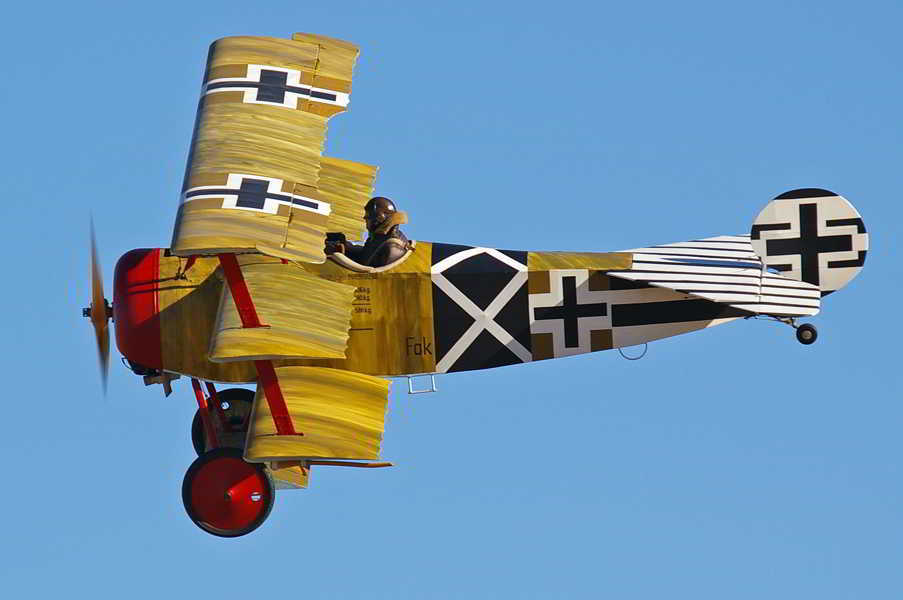
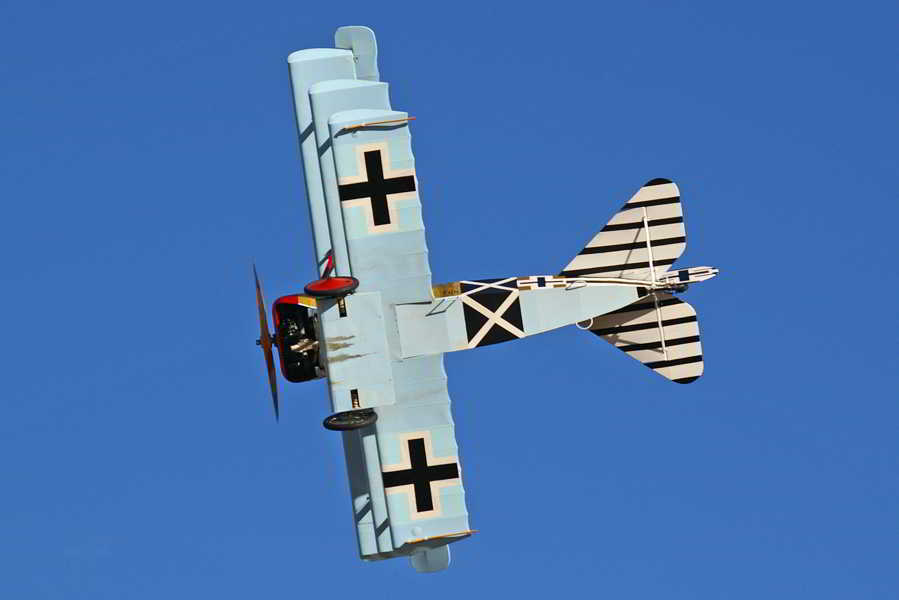
Fokker Dr.1 in the colour scheme of an unknown pilot of Jasta 11.
Photo: © Historical Aviation Film Unit
Year: 1917 Built: 320 Top Speed: 185 km/h Ceiling: 6,100m Wingspan: 7.19m Height: 2.95m Length: 5.77m Max Weight: 586kg Engine: 110hp Oberursel UR.II rotary Climb: 5.7m/s Range: 300km Armament: 2 x 7.92mm Spandau machine guns This Aircraft: Replica with a 165hp 7-cylinder air cooled Warner Scarab radial engine, built in the USA.
The Fokker Dr.1 was powered by a 110 horsepower Oberursel UR.II rotary engine, which was essentially a German copy of the French Le Rhône 9J engine. This powerplant enabled the aircraft to reach a top speed of around 115 mph (185 km/h), a respectable figure for its time. Its armament typically consisted of two 7.92 mm Spandau LMG 08/15 machine guns, which were synchronized to fire through the propeller arc without striking the blades, a technological marvel in early aviation warfare. Despite some initial structural problems, which were quickly addressed, the Dr.1 proved to be a highly effective fighter in the hands of a skilled pilot.
One of the most famous German units to fly the Dr.1 triplane was Jagdstaffel 11 ("No 11 Fighter Squadron"). Formed in September 1916 when the German air force had decided to create a number of specialist fighter squadrons the first commander of Jasta 11 was Oberleutnant Rudolf Lang who served in the role from October 1916 until January 1917. Following Lang, Rittmeister Manfred von Richthofen (the Red Baron) became the Commanding Officer. By this time von Richthofen had already had several months of distinguished service with Jasta 2 under another famed German fighter ace, Oswald Boelcke.
Under von Richthofen's command Jasta 11 became a formidable fighting unit. The princiapals for formation flying were strictly enforced, and no pilots were allowd to atack the enemy without assistance. Von Richthofen believed that many British pilots were downed because they became 'showy' in combat, and that their looping, diving and inverted flying was essentially reckless and useless in combat.
A Fokker Dr.1 Triplane against a British Sopwith Camel dogfight
This aircraft represents an aircraft of Jasta 11 flown by that unit in late April 1918. Original photographs of this aircraft exist, but there is no record as to who the primary pilot was, nor what the construction number was.
Jasta 11 was one of the four squadrons that made up the larger Jagdgeschawder 1 unit which was formed in June 1917 with Manfred von Richthofen as the first commanding officer. The purpose of this new, larger fighting force was to have the ability to concentrate a significant number of fighter aircraft in a single part of the front line quickly and efficiently in order to gain air superiority when it was required.
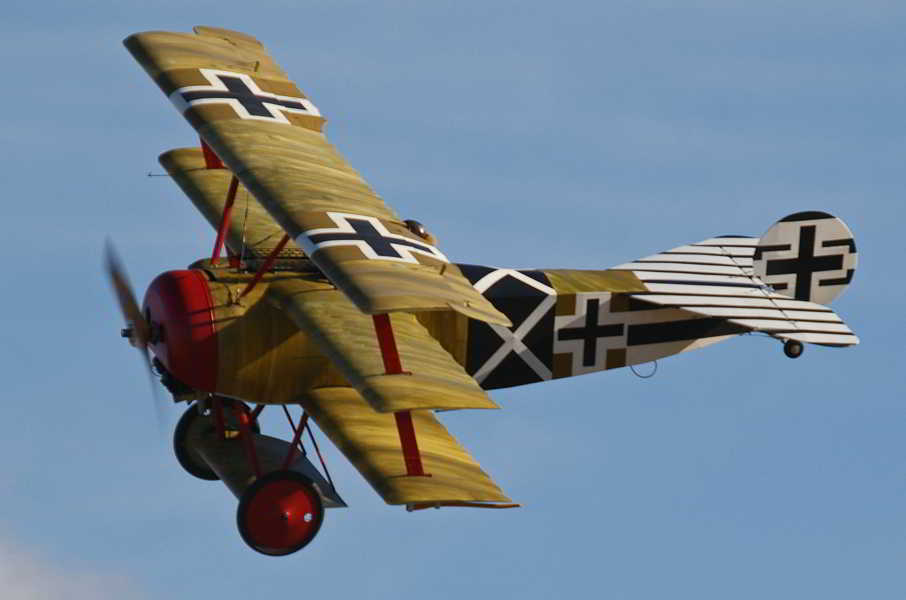
This is an accurate colour scheme of a Jasta 11 aircraft, but the pilot who flew the Triplane is unknown. Photo: © Historical Aviation Film Unit
JG 1 was a highly mobile unit, and as such it was often referred to as the 'Flying Circus' -- not because of the brightly colour aircraft colour schemes, but more because the unit could pack up in one location, and then using the rail network quickly move to another part of the front line and swing into action relatively quickly (just like an entertainment circus).
More Videos:
Another Triplane Vs Sopwith Camel Dogfight
The Magnificent Seven Of Jasta 11
More Photos:
Share This Page :
If you sign up to be a Member on our Historical Aviation Film Unit channel then you'll have immediate access to this extra material. Click the button at right, then on our channel page click the 'Join' button - it'll help us immensely.
Please consider subscribing to HMTV, or buy us a drink to support our historical (story and film) preservation endeavours.
Copyright © All Rights Reserved — Historical Aviation Film Unit
Template by OS Templates