Tora! Tora! Tora! Reenactment

-
Preserving and Recording Audio-Visual History
Designed in China in 1959, the Nanchang was developed as a military training aircraft for the People's Liberation Army Air Force (PLAAF). The design proved to be so succesful for primary training purposes that production of the type ran from 1960 until the mid-1990s.
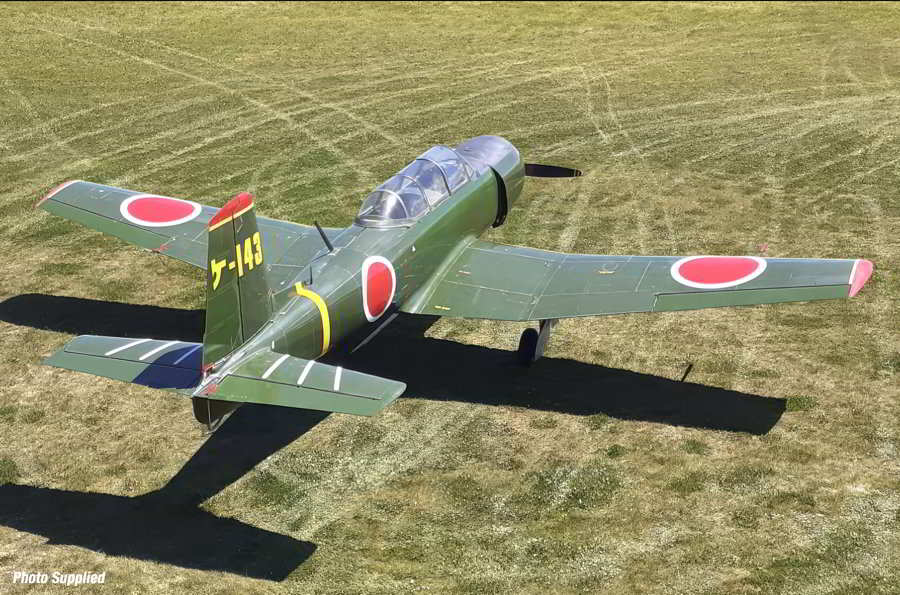
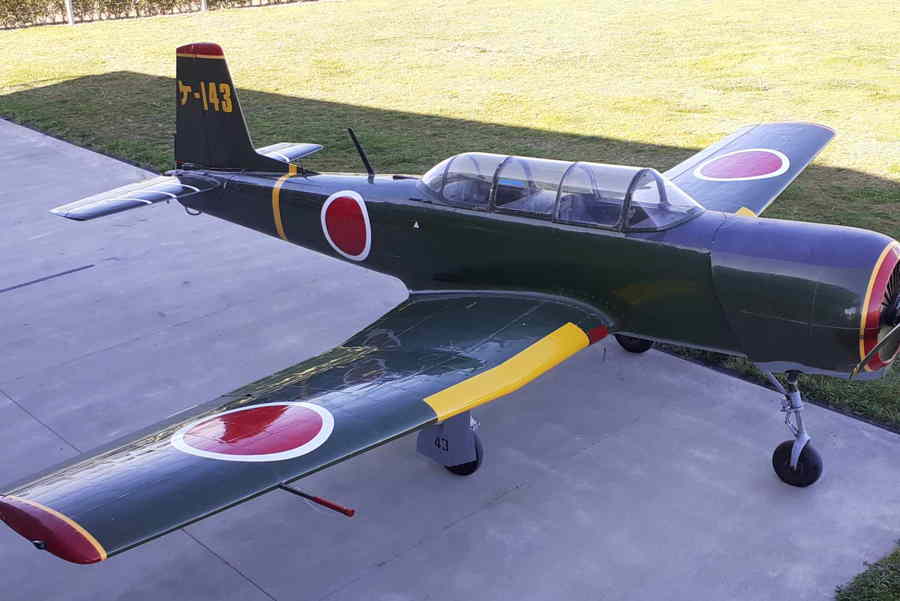
The Nanchang in the guise of a WW2 Japanese aircraft.
Photo Supplied
Year: 1959 Built: approx 3000+ Registration: ZK-kwi Top Speed: 300km/h Wingspan: 10.22m Height: 3.3m Length: 8.46m Engine: 285hp Zhuzhou Huosai HS-6A radial Ceiling: 6,520m Range: 700km
Both the Yak 52 and the Nanchang have a common ancestor in the earlier Yak 18 trainer from the late 1940's.
Over 3000 CJ-6's were built by the Nanchang Aircraft Factory (now known as Hongdu Aviation Industry Group) as Chinese as military trainers between 1950 and 1994. Powered by a slightly smaller 285 horse power engine, the fully retractable undercarriage does give it a slightly better cruising speed than the comparible Yak aircraft. The engine in the aircraft, a Zhuzhou Huosai HS-6 radial engine, is a Chinese-produced version of the Soviet AI-14 engine.
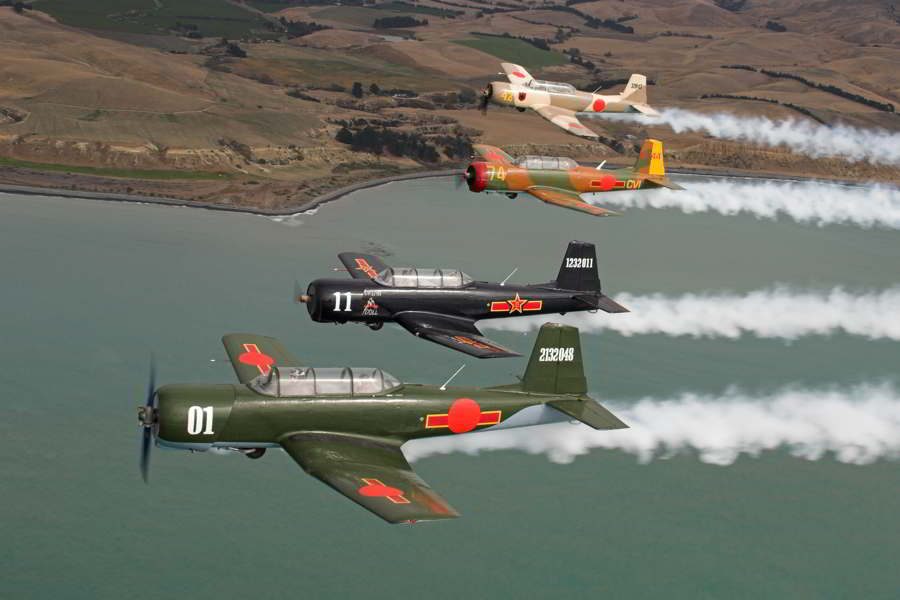
Virtually unknown in the west prior to 1990, the type has since been bought in numbers by owners in the USA, Australia and New Zealand and has proved to be a very popular introductory warbird. Outwardly similar to the Yak-52 design, the CJ-6 can be distinquished from its Soviet-made cousin by the slight dihedral (bend) in the outer wings, and by the fact the undercarriage fully retracts (compared to the YaK 52 where they only partially retract).
This movie highlights Steve Petersen's iconic Nanchang CJ-6a 'China Doll' as seen at the Classic Fighters 2001 airshow in Blenheim, New Zealand.
Beyond its primary role as a trainer, the CJ-6 has also been used for aerial demonstrations and civilian uses, including in sport aviation. The aircraft's airframe is designed to withstand rigorous aerobatic maneuvers, and it's often seen in airshows. In the civilian market, the Nanchang enjoys popularity among private collectors and aviation enthusiasts, particularly due to its historical significance and the unique flying experience it offers.
It's interesting to note that the CJ-6 relies heavily on pneumatic systems for several critical functions. These include managing the landing gear and flaps, operating the brakes, and starting the engine. The aircraft is equipped with an air pump driven by the engine, which replenishes the pneumatic system. However, in situations where the air pressure is insufficient for starting the engine, the aircraft's internal air tank can be refilled using an external supply. In the absence of such an external source, there's a provision for manually starting the engine by hand swinging the prop.

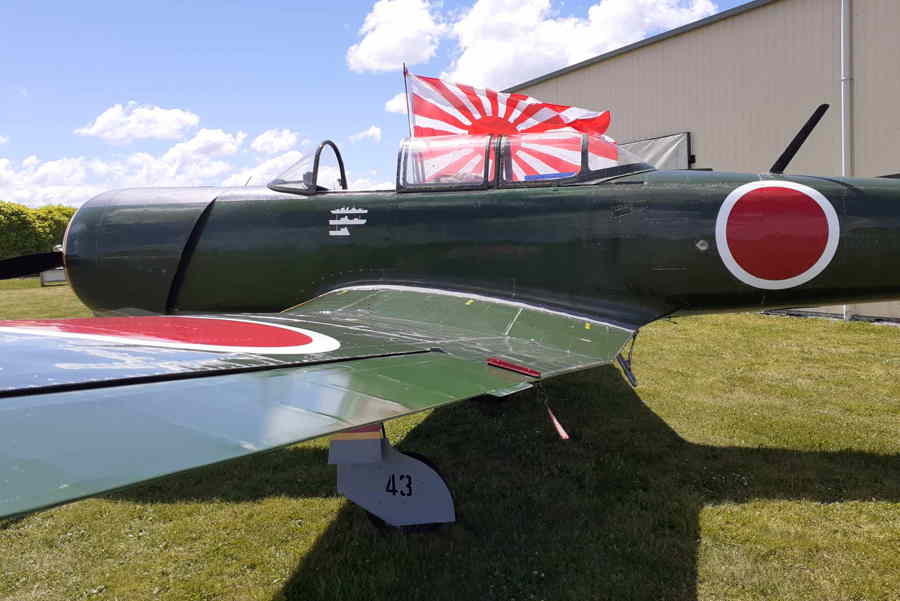
Another viw of the Japanese markings on ZK-KWI Photo Supplied
Why A Japanese Colour Scheme On A Chinese Aircraft?
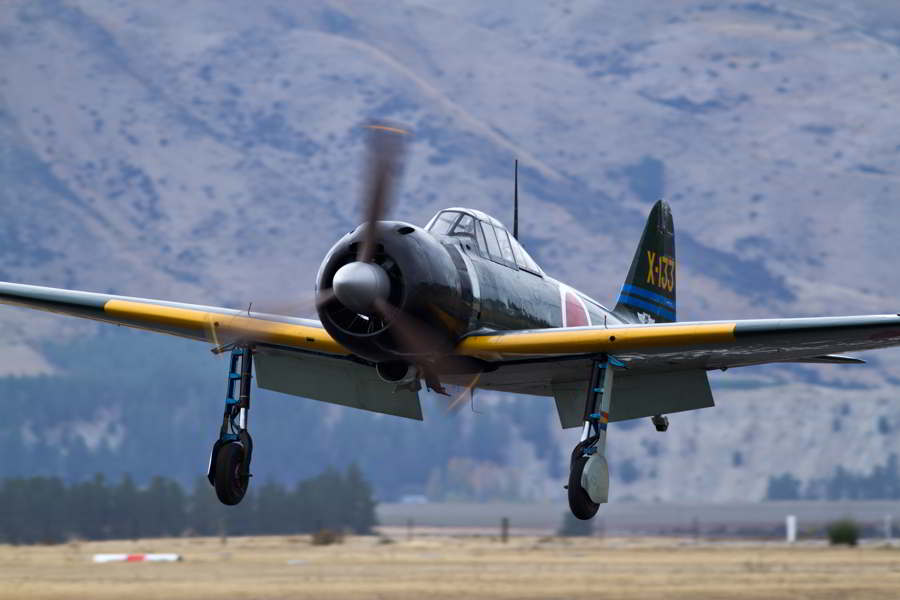
The colour scheme of this aircraft is purely fictional, but it's modelled after those of WW2 Imperial Japanese Navy (IJN) aircraft, some of which had a similar profile to the Nanchang. This enables the aircraft to be used as an IJN 'adversary' during displays with other aircraft types that operated in the Pacific Theatre during WW2. While it's not an accurate replica of a Japanese aircraft, the prescence of an IJN 'actor' creates a more realistic display and facilitates the educational story-telling of the Pacific Theatre conflict.
More Videos:
Tora! Tora! Tora! Reenactment
Two Nanchangs Over Alpine Lake
Aerobatic Practice In Nanchang
Two Nanchangs At Omaka Airfield, Blenheim, NZ
More Photos:
Share This Page :
If you sign up to be a Member on our Historical Aviation Film Unit channel then you'll have immediate access to this extra material. Click the button at right, then on our channel page click the 'Join' button - it'll help us immensely.
Please consider subscribing to HMTV, or buy us a drink to support our historical (story and film) preservation endeavours.
Copyright © All Rights Reserved — Historical Aviation Film Unit
Template by OS Templates