Sopwith Triplane Display At Wongs Over Wairarapa

-
Preserving and Recording Audio-Visual History
In early 1916 Sopwith produced the 'Pup', a biplane aircraft with exceptional manoeuvrability and performance -- the ideal characteristics of a fighter aircraft. In an attempt to better that aircraft, the designers at Sopwith added an additional wing, and in doing so produced the Triplane. The outstanding climb rate and agility of the new type so impressed the German aircraft designers that over two dozen German triplane designs were soon being developed. The most well known and successful of these being the Dr.I developed by Fokker.
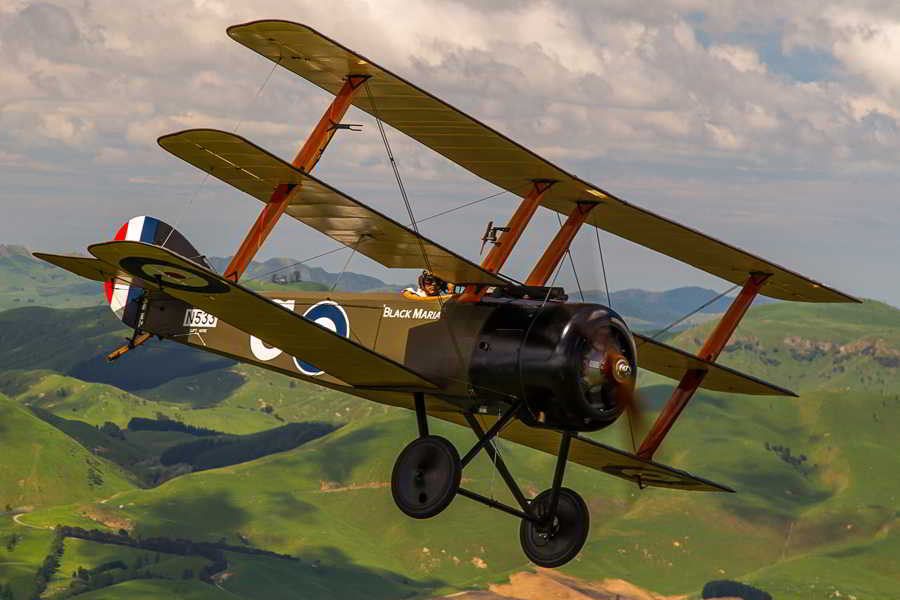
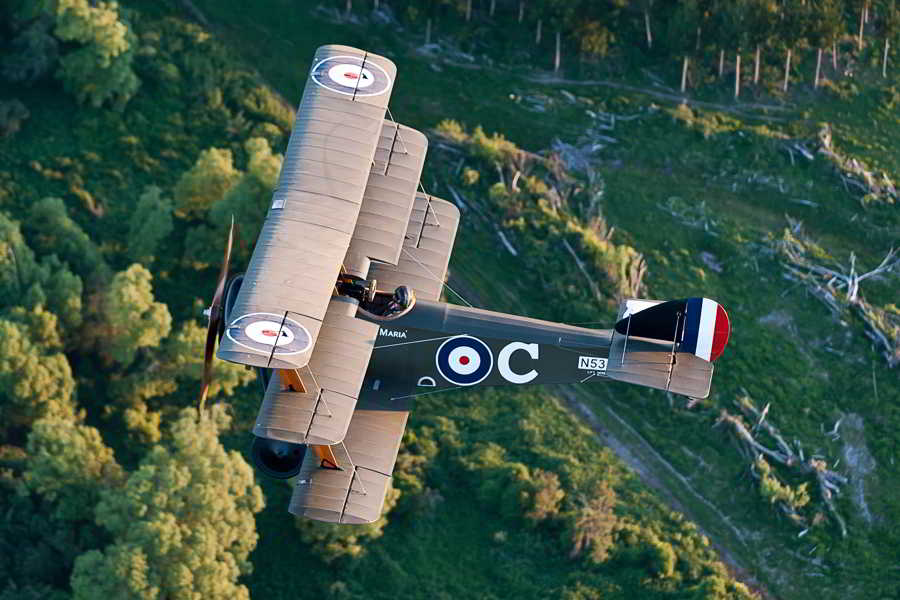
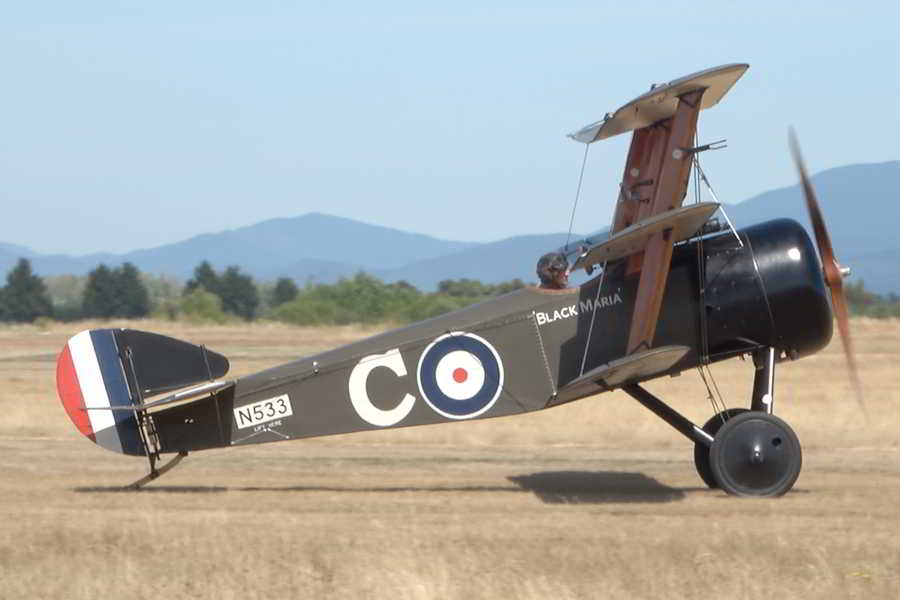
A Sopwith Triplane in the colours of N533, flown by Lt Raymond Collishaw, Royal Naval Air Service.
Photo: © Historical Aviation Film Unit
Year: 1916 Built: 147 Top Speed: 188 km/h Ceiling: 6,250m Wingspan: 8.08m Height: 3.2m Length: 5.73m Max Weight: 642kg Engine: 130hp Clerget 9B rotary Climb: 5.0m/s Range: 450km Endurance: 165 mins Armament: 1 or (rarely) 2 x .303 Vickers machine guns This Aircraft: A replica with 165hp Warner Scarab engine. Started in the USA and completed by TVAL in New Zealand.
Debuting on the Western Front in December 1916, the Sopwith Triplane was operated exclusively by the Royal Naval Air Service (RNAS) until its replacement by the Sopwith Camel in the summer of 1917. This relatively sort operational life-span was in part due to the fact that the aircraft was difficult to repair in the field (the oil and fuel tanks were difficult to get at), and eventually it was difficult for front line units to obtain spare parts.
Another reason for the short life span was the fact that the vast majority of the Triplanes in service were armed with a single Vickers machine gun, while its contemporary adversaries such as the Albatros and Pfalz fighters all sported twin machine guns. That said, many Triplanes continued to serve as training machines until the end of the war in November 1918.
The colour scheme of this aircraft is that of one of several Triplanes flown by Canadian ace Lt Raymond Collishaw. Flying with No 10 Naval Sqd, RNAS. Collishaw was the third highest British ace, ending the war with a total of 60 victories. In 1919 he increased his tally to 62 while commanding No 47 Sqn RAF during the Russian Civil War.
Sopwith Triplane versus Fokker Dr.1 Triplane dogfight. This 'battle' is unlikely to have occured during WW1 as the Sopwith aircraft had been replaced in service by the time the Fokker Dr.1s had reached the front lines.
Collishaw led one of the most famous groups of aircraft in World War I, known as the "Black Flight." This unit, flying Sopwith Triplanes, was named for the distinctive black paint of their aircraft. Aircraft in the flight included "Black Prince", "Black Death", "Black Sheep" and "Black Roger".
Collishaw's own Triplane, nicknamed "Black Maria" became especially feared by the German pilots (during this period several different Triplanes carried that same name). In June 1917, the Black Flight, under Collishaw's leadership, achieved an extraordinary feat by shooting down 87 German aircraft in just three months, a testament to both the skill of the pilots and the effectiveness of the Sopwith Triplane in combat.

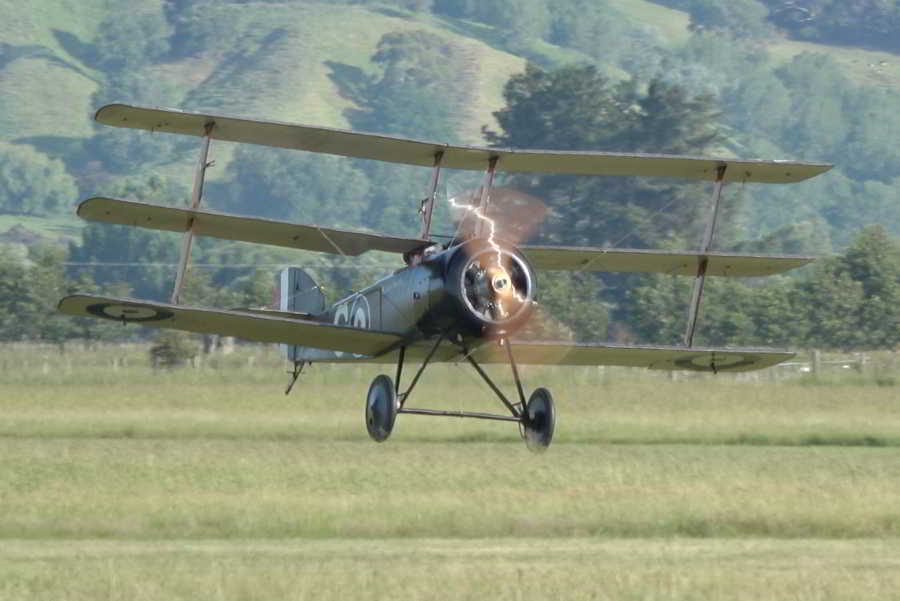
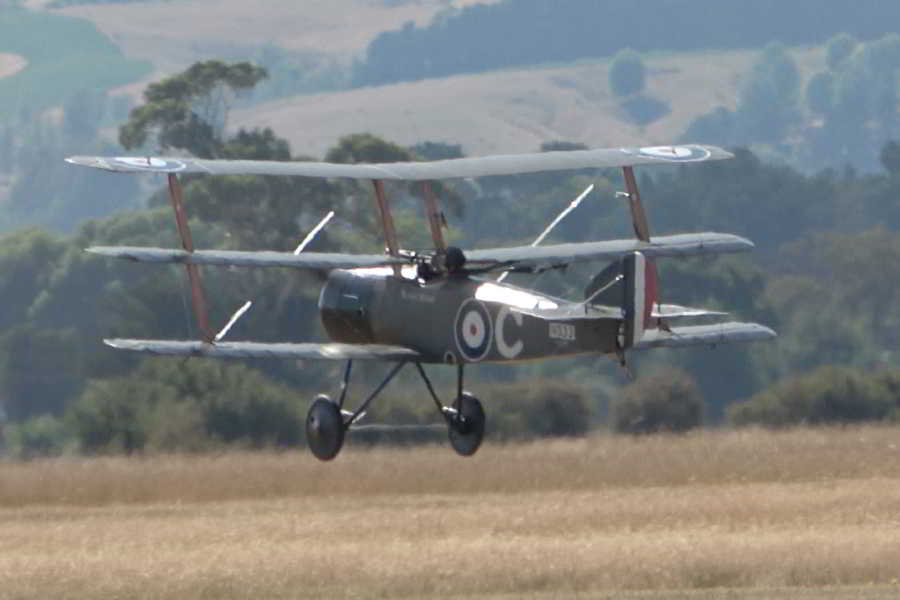
From behind and behind it's readily apparent how narrow the three wings of the triplane are. Photo: © Historical Aviation Film Unit
On one notable occasion, Collishaw used his Triplane in a daring rescue mission. After a fellow pilot was shot down behind enemy lines, Collishaw, aware of the dangers, took off to locate and rescue his comrade. Braving enemy fire, he managed to locate the downed pilot who was evading capture on the ground. Demonstrating remarkable flying skills and courage, Collishaw provided cover from the air, successfully directing friendly ground forces to the pilot's location, ultimately leading to a successful rescue. This act of bravery was one of the many that cemented Collishaw's reputation as an exceptional pilot and a hero of his time.
More Videos:
Sopwith Triplane Display At Wongs Over Wairarapa
A Triplane Touch And Go
R.A.F. F.E.2b With Sopwith Triplane Escort
More Photos:
Share This Page :
If you sign up to be a Member on our Historical Aviation Film Unit channel then you'll have immediate access to this extra material. Click the button at right, then on our channel page click the 'Join' button - it'll help us immensely.
Please consider subscribing to HMTV, or buy us a drink to support our historical (story and film) preservation endeavours.
Copyright © All Rights Reserved — Historical Aviation Film Unit
Template by OS Templates