Coming Soon

-
Preserving and Recording Audio-Visual History
The B.E.12 was essentially a B.E.2c which had the front (observers) cockpit covered and replaced with a large fuel tank, and the 90hp RAF1a engine replaced with the newer 150hp RAF4a engine. While often referred to as the 'fighter' version of the B.E.2, in mid-1915 other companies with contemporary aircraft such as the Avro 504 and the Sopwith 1½ Strutter were also experimenting with converting two-seaters into single seat aircraft with a larger fuel capacity and bomb load. The lack of a suitable British interrupter-gear (which would allow for a forward firing machine gun) until at least March 1916 also meant the type was unlikely to have been designed specifically as a fighter.

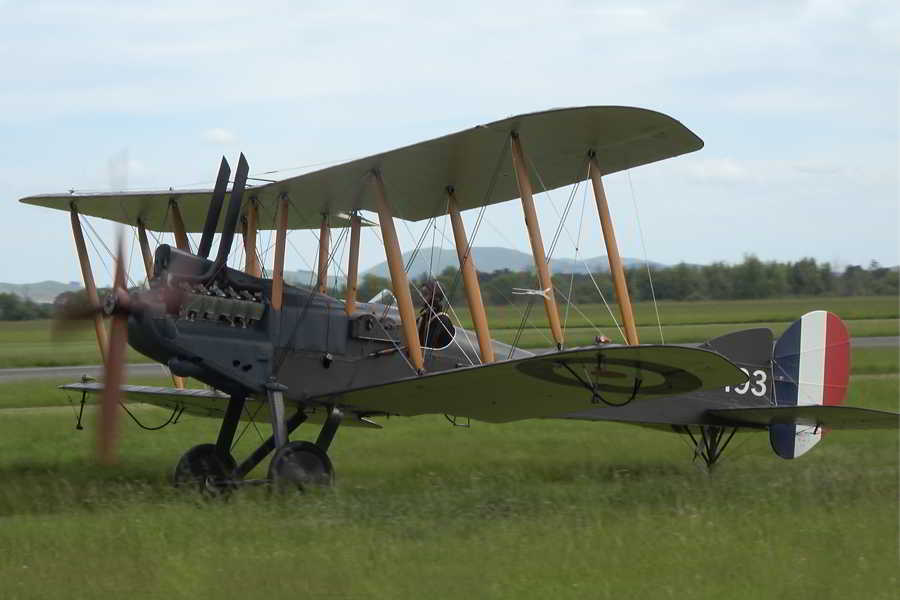
For all intents and purposes the B.E.12 is indistinguishable from a B.E.2c at any distance. This aircraft is in the colour scheme of '6493', of No 50 (Home Defence) Squadron, Royal Flying Corps.
Photo: © Historical Aviation Film Unit
Year: 1916 Built: 601 Top Speed: 164 km/h Operational Ceiling: 3810m Wingspan: 11.3m Height: 3.36m Length: 8.3m Max Weight: 1069kg Engine: 50hp R.A.F4a inline v-12 Climb: 2.3m/s Endurance: 180 mins Armament: 1 x 0.303 Vickers m/gun and up to 150kg bombs This Aircraft: A new TVAL reproduction airframe with a TVAL-built R.A.F.4a reproduction engine.
The first B.E.12s of No 19 Sqn reached France in early August 1916, while those of No 21 Sqn arrived later that same month. These were the only two units to operate the type in France, and by March 1917 it had become apparent that the lack of defensive armament meant the type was hopelessly outclassed by the Albatros and Halberstadt fighters that the German Air Service was fielding at that time. The type was withdrawn from front line service and the bulk of the remaining B.E.12 aircraft were used in the UK either for training or with Home Defence units (to protect against the Zeppelin and Gotha bomber raids on Britain).
During May 1917 B.E.12 '6493' is recorded as having been flown by Lt. H.T.O Winsor on two occasions, once against a night Zeppelin raid on London, and later during a daytime Gotha raid on Folkestone. In August and September 2nd Lt W.G. Latham flew the aircraft on nighttime operations against Gotha raids on targets in London and Kent.
The Zeppelin raids were significant not only for their military impact but also for their psychological effect on the British public. The Zeppelins, due to their size and relatively silent operation at high altitudes, brought the war directly to British civilians, targeting major cities including London, Liverpool, and Manchester. The attacks were a shock to the British populace, who had felt relatively insulated from the direct impacts of war on the home front.
R.A.F. B.E.12 Video Coming Soon
The technology behind the Zeppelin raids was both innovative and formidable for its time. The Zeppelins were massive airships, capable of traveling at high altitudes and carrying substantial payloads. They were filled with lifting gases like hydrogen, which provided buoyancy but also made them highly flammable and vulnerable to attack. The raids conducted by these aircraft involved dropping bombs and incendiary devices over urban areas, causing significant damage and civilian casualties. Despite their initial success, the effectiveness of Zeppelin raids gradually decreased over time due to advancements in British air defenses, including better anti-aircraft guns and the development of more effective fighter aircraft specifically designed to intercept and destroy these airships.

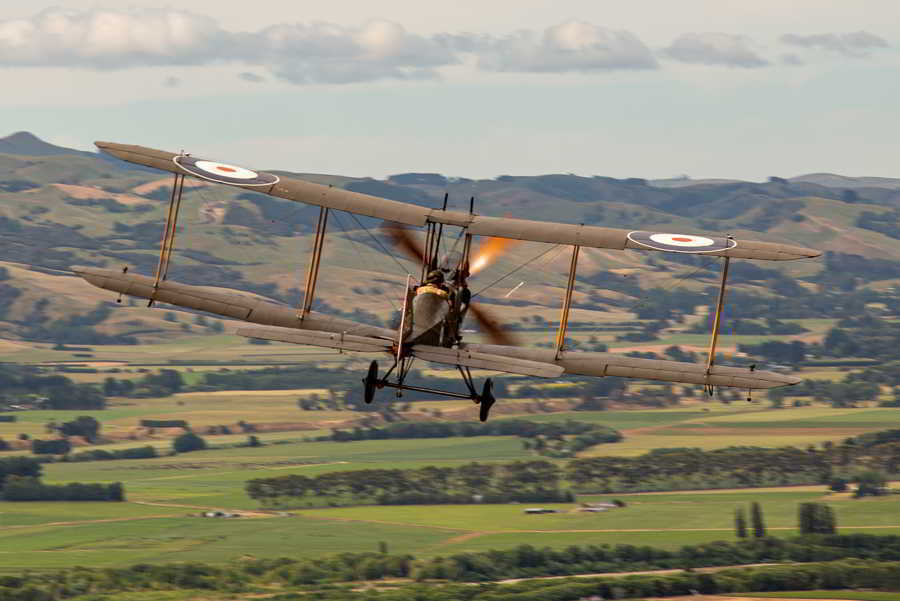
Aerial view of the BE.12 showing its similarities with the B.E.2 aircraft it is based upon. Photo: © Historical Aviation Film Unit
The psychological impact of the Zeppelin raids on England was profound. They marked a new era in warfare, where civilian populations could be targeted far from the front lines. The raids brought the horrors of war into the lives of everyday citizens, creating a climate of fear and uncertainty. In response to the raids, the British government implemented measures such as blackout curtains to make it harder for the Zeppelins to find their targets. While the material damage inflicted by the raids was relatively limited in comparison to later strategic bombing campaigns in World War II, the Zeppelin attacks had a lasting impact on military strategy and public consciousness about the nature of modern warfare, highlighting the vulnerability of civilian populations in total war.
More Videos:
Coming Soon
Coming Soon
More Photos:
Share This Page :
If you sign up to be a Member on our Historical Aviation Film Unit channel then you'll have immediate access to this extra material. Click the button at right, then on our channel page click the 'Join' button - it'll help us immensely.
Please consider subscribing to HMTV, or buy us a drink to support our historical (story and film) preservation endeavours.
Copyright © All Rights Reserved — Historical Aviation Film Unit
Template by OS Templates