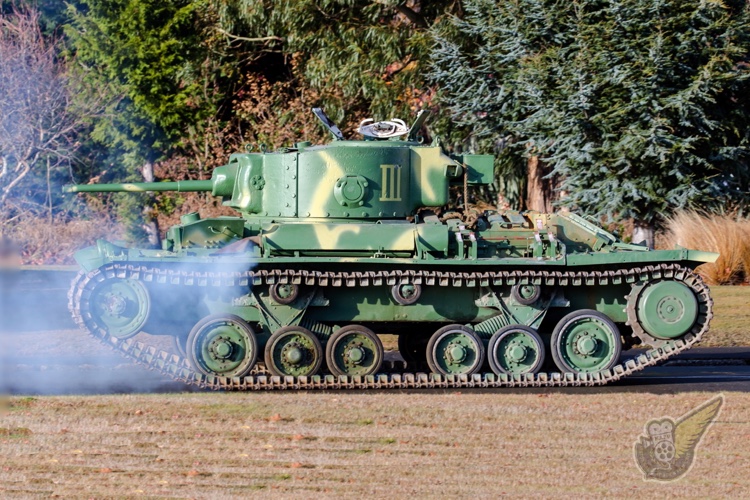
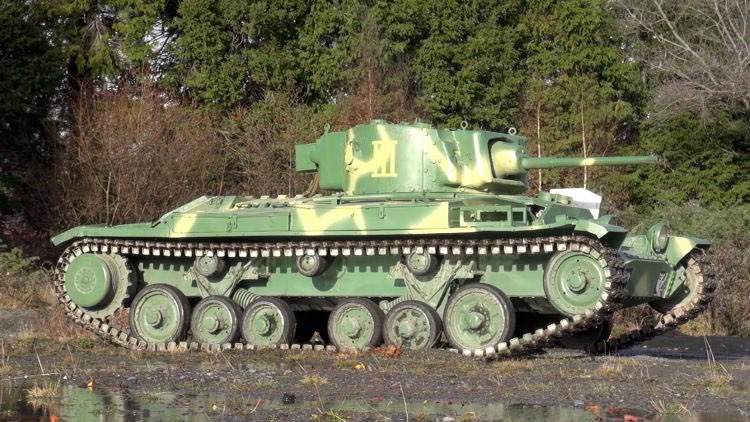
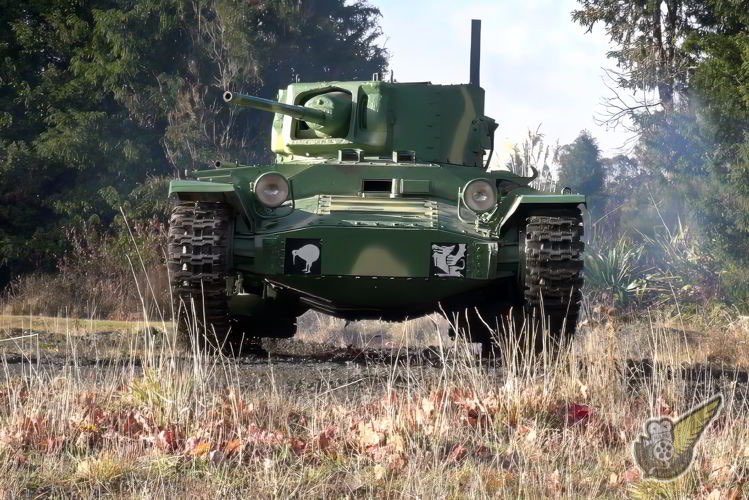
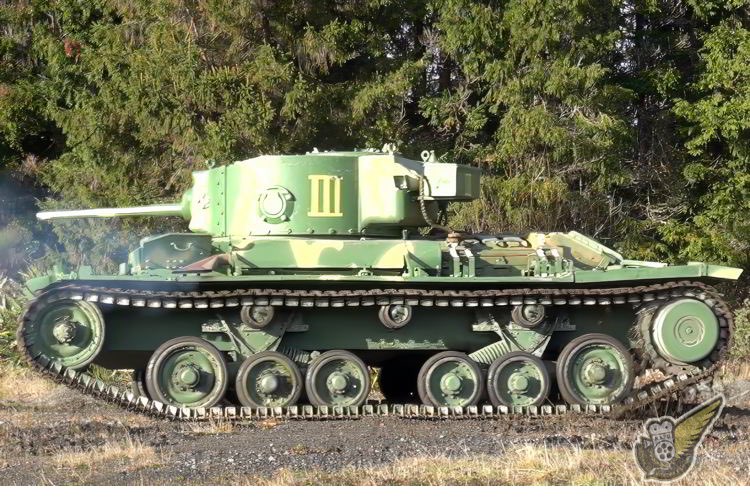
The Valentine was one of the most important British infantry tanks of the Second World War. Built in vast numbers between 1940 and 1944, more than 8,200 of all marks rolled off production lines in Britain and Canada. Compact, reliable, and heavily armoured for its day, the Valentine served across multiple theatres of war—from the deserts of North Africa to the jungles of the Pacific.
Click To View: The video highlights the sight of the tank moving, and in particular the incredible sound as well -- something that is rarely experienced these days.
New Zealand’s connection to the Valentine was significant. In 1941, Britain shipped Valentines to New Zealand to strengthen the country’s armoured forces, and eventually the New Zealand Army operated 81 Mk.V models (as well as many earlier variants). The Mk.Vs didn't see overseas service in New Zealand hands as they remained in New Zealand to form the backbone of the NZ Army's armoured training. Crews who trained on them later went on to fight with the 4th New Zealand Armoured Brigade in Europe, using Sherman tanks.
The Valentine was initially conceived as a simple, economical infantry tank. Its design favoured protection and ease of manufacture over raw firepower. Early models carried a three-man crew, but from the Mk.III onwards the turret was enlarged to take a loader, increasing the complement to four men: commander, gunner, loader, and driver. The Mk.V shared this arrangement but introduced an American-built General Motors 6-71 diesel engine, which gave it improved reliability and efficiency compared to earlier petrol-engined versions. On roads the Mk.V could reach around 24 km/h, and cross-country speeds were closer to 15 km/h. With a fuel capacity of 300 litres, its operational range was about 145 km on roads.
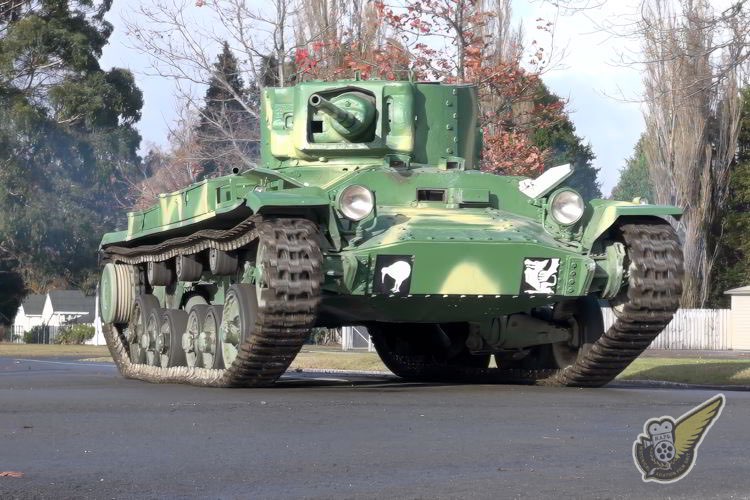
Armour protection was strong by the standards of 1940. The turret front and rear carried 65 mm of riveted plate, with 60 mm on the hull sides and nose. The upper surfaces were thinner, ranging from 10–20 mm, and the lightest armour on the vehicle was just 6 mm. Although this protection initially made the Valentine tough against anti-tank rifles and lighter weapons, by 1942 the growing prevalence of high-velocity guns meant its armour could no longer guarantee survival in direct engagements with German panzers.
Armament also reflected its early-war origins. Most Valentines, including the Mk.V, mounted the 2-pounder (40 mm) gun paired with a coaxial BESA 7.92 mm machine gun. The 2-pounder was an effective weapon against early German and Italian armour, but as the war progressed it became inadequate against heavier opponents. Some later Valentine variants were up-gunned with the 6-pounder or even the British 75 mm, but the Mk.V remained a training tank in New Zealand, where the lighter gun was sufficient for its instructional role.
Despite these limitations, the Valentine’s reliability earned it a good reputation. Crews appreciated its mechanical dependability and relatively low maintenance needs compared to other British tanks of the early war period. It was also relatively compact, which made it less conspicuous on the battlefield, though at the cost of crew comfort and space.
In New Zealand, the tanks served a vital if unsung role. For nearly two decades—until 1960—young Kiwi soldiers learned the basics of armoured warfare on Valentines. This gave the New Zealand Army a foundation in tank operations, even though its Valentines themselves never fired a shot in anger under the NZ flag.
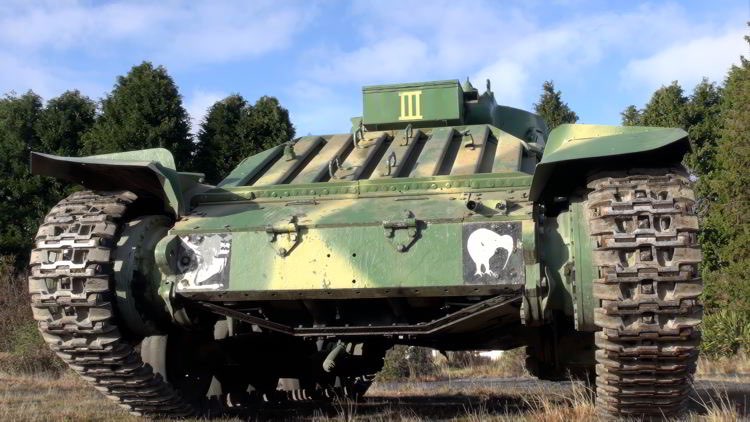
The National Army Museum’s operational Valentine Mk.V at Waiouru remains a rare survivor of this fleet. Interestingly, while it is a Mk.V, it's painted in the colours of a Mk.III that served with the 3rd New Zealand Division in the Pacific Theatre during WW2. The white dragon insignia on the hull pays tribute to those vehicles and their crews who deployed to the Solomon Islands and other Pacific postings.
The Valentine may not have been the most glamorous tank of the Second World War, but its combination of reliability, protection, and availability ensured that it played a crucial role in the early years of the conflict. For New Zealand, it was the tank that introduced a generation of soldiers to armoured warfare—an important step in the country’s military development.
Exclusive Members-Only Content On Our YouTube Channel
If you sign up to be a Member on our Historical Aviation Film Unit channel then you'll have immediate access to this extra material. Click the button at right, then on our channel page click the 'Join' button - it'll help us immensely.